

An unknown disease is killing a little girl. Her family’s only hope is a strange new medical procedure.
But the cure could be worse than the disease…

An unknown disease is killing a little girl. Her family’s only hope is a strange new medical procedure.
But the cure could be worse than the disease…
Ah, Word! You and your quote smart unquote quotes!
Finally got smart and added in a new AutoCorrect rule in Microsoft Office 2010: replace —“ (which is what it loved to do to me, all the time) with —” (which will save me a lot of backspacing. In case you have this problem:
File>Proofing>Autocorrect Options (it’s a button near the top).
To make sure you’re getting left double quotes and right double quotes, use the Character Map to insert those marks in the appropriate fields.

I’ve been CRAVING a virtual Rolodex/dossier box/index card program to help me organize things (like my book info)…today I stumbled upon a BEAUTIFUL and EASY TO USE Personal Information Manager (PIM) that let me do exactly what I wanted quickly, with little fuss.
It’s called SYMPHYTUM, it’s free for Windows, Linux, and Mac, and I love it already.  Each record starts as a blank screen, but you add the fields you want where you want them. Simple pick-an-option-then-drag-and-drop. I used a lot of “text” fields for my book page here, but the “date” field will pull up a calendar from which you can choose dates, and clicking the globe icon in a “web link” field will take you to the URL you entered in there. I’m sure there are other cool features.
You can also view all the records in a table, which makes things easy to see.
Two tricksy things:
My wishlist:
The next software program I want to get for writing is TrackerBox (which tracks sales across different vendors) but until then, Symphytum will work well in helping me keep ISBNs and the like straight.
 Just began writing in the most beautiful Leuchtturm notebook EVER.
Notebook: Leuchtturm 1917 Master Ruled (Hardcover)
Sticker: Bought at MistyFig’s Gift Shop (Etsy storefront). Quark art by Amy King.
Why yes, Quark *is* holographic!

Yup! Formatting for this section of the novel is DONE (as far as the eBook is concerned)! Woohoo! That wasn’t bad at all! (I psych myself out with this project all the time.)
Goodness gracious, I hope my volunteer editor gets me the last two parts soon! I want to reread this! X3
Someday I hope you get to read it, too!
The DuFresnes are gone.
The sheriff’s horse disappeared weeks ago.
Now the vampire that took them wants to chat…
“Growing Shadows in the Desert” is a short story by Danielle Williams, free on this website for one week only. Also available as an ebook through various online retailers.
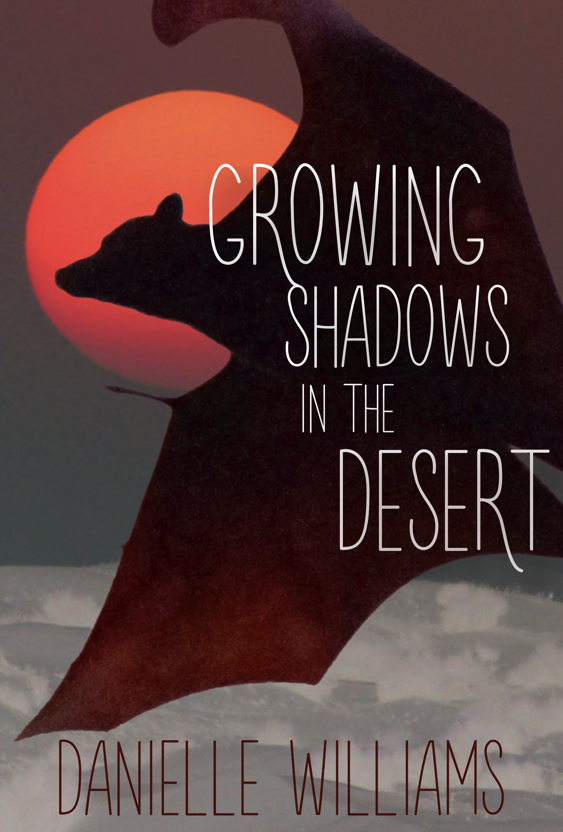
In fact, I just hit 50K words on my nosferatu novel!
And I submitted a fantasy story to the DuoLingo call for stories! That money sure would help me out in buying ISBNs! Or, you know…gas.
I’ve been using Habitica to help me take vitamins and do art and stuff more consistently. You know it’s an effective program because within a week of joining, I cleaned my desk. (My desk hadn’t been cleaned for MONNNNNTHS and was just buried in papers.) I’ll try to use it to help me update my blog more consistently sheesh!
I’m enjoying Aggretsuko on Netflix (Japanese only please, they added too many swears to the English dub!) and the Great Big Story channel on YouTube.
I’ve been feeling pretty blah this year, but things are turning around now, thank goodness!
HOW WRITING WORKS:

PRODUCTIVITY KILLER:

TheAwkwardYeti: the only place you’ll find more truth is in church.
Another great post from Seth Godin:
Low & Slow (vs. fear)
My sourdough rye bread failed. For the first time since I’ve been baking from this starter, this weekend’s batch didn’t work.
I know why.
I rushed it.
I didn’t let the dough ferment long enough.
And then I made the oven hotter, in an effort to get the loaves finished so I could leave to meet someone.
That’s not how great bread works. It’s ready when it’s ready, not when you need it to be.
Of course, the analogy is obvious. Much of the work we do as creators, as leaders, as people seeking to make change–it needs to ferment, to create character and tension and impact. And if we rush it, we get nothing worth very much.
There’s a flipside.
Sometimes, we mistakenly believe that we’re building something that takes time, but what we’re actually doing is hiding. We stall and digress and cause distractions, not because the work needs us to, but because we’re afraid to ship.
Impatience can be a virtue if it causes us to leap through the fear that holds us back.
This is something I am often conflicted about. On the one hand, I do believe the creative well can be overfished, and some stories need time in the unconscious to develop (or gestate, as the book Movies in the Mind calls it)…but I also believe if you just sit down, the story shows up–and I’ve had the latter happen to me a bunch of times, even during times of great stress!
But I feel the temptation towards for procrastination when a novel or story leaves the first section (introducing the character in a setting with a problem). I HAVE NO IDEA WHAT COMES NEXT but usually the solution is to sit down and just have fun with whatever shows up next. Beat the fear by being willing to try.
But sometimes I’m genuinely tired and need a break, time to rest up and watch Star Trek and doodle aimlessly.
You have to show up. But also…
 I’m just not sure which I believe more strongly! What do you think?
(From a comment over at CoverCritics.com)
“I think this cover would not pass my test of imagining it with a title in an unfamiliar language. If you were to do that, would you still be able to tell anything at all about the nature, themes or even genre of the book?”
That’s a great idea. If everything about your book cover was the same (pics, typefaces) but the words were foreign/lorem ipsum, what assumptions would your viewer make?