White Sheet of Death

Muse at 11, Writing

The blank sheet of paper (I just wrote “blank sheet of failure”) is scary.  It comes with an implied message that you, sir, ain’t manly enough to fill me with anything of quality. 

Ignore it.  A dozens of pages of embarrasing scrawl in your notebook may be humbling, but those pages are also tangible results of your work.  Retreat from your desk with nothing in hand and the blank paper will be smirking behind your back before the door’s clicked shut.

Here’s my motto:

YOU CAN’T WRITE SOMETHIN’ IF YOU DON’T WRITE NOTHIN’.

Want to write something of quality?  Get ready to murder some trees, because until you start filling pages with something-anything!, you will never achieve quality.

Take ‘er away, Chuck.

“You’ve got a million bad drawings in you; you better get started.”
Chuck Jones

Create Inspirational Mood Boards for Your Writing Project with OneNote

Writing

Guess what, fellow writers?  I’ve found a use for Microsoft OneNote.

While I don’t like it as a wiki, it’s perfect for making mood boards!

Mood boards are used by some visual artists to help them visualize a project.  You collect images that evoke the mood you want for your piece, then pin the whole collection up where you can see and refer back to it while you work.

In OneNote, collecting pics is as easy as dragging images from the web (or your harddrive) into a file for your novel.  I’ve been using it to collect pictures for different locales, characters, and fashions in my sci-fi world, and it’s much tidier than having the images scattered among my harddrive folders!

* * *

Another fun thing I’ve been doing in Microsoft OneNote is collecting photos of actors who remind me of my characters.

While I’m a have the ability to draw my characters if I want, my mental image of a character is fairly fluid–so why not grab some real life influences?

Here’s a few scientists my protagonist runs around with:

I was thrilled when I saw the trailer to MoneyballJonah Hill‘s character really struck me as a solid reference for my protaganist’s archrival-slash-boss, Vincent Harper.

I’ve always seen my protag’s weasely coworker Timothy Wallman as Steve Buscemi, but I didn’t realize why it was so easy to imagine Steve-o in a labcoat until I found this image of his from Spy Kids!
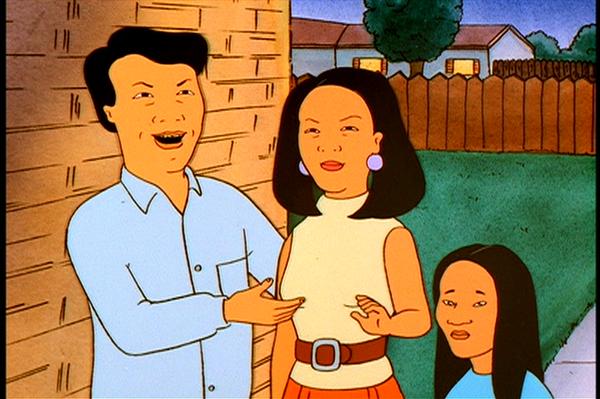
One of his other coworkers, Vanessa Chak, seemed to arrive as a crankier version of King of the Hill’s Minh Souphanousinphone, though when I drew Chak from imagination, I came up with this:

Have you ever used mood boards before in your writing?  I’d love to hear about your experiences!

Making Smart Decisions Stupidly!

Writing

As an author, your job is to ruin complicate fictional lives.  This is a way to do it.

In writing a scene recently, I saw 2 choices my character could make.  The first one was The Smart Choice (don’t give your blood to untrustworthy magical lady X).  The Wrong Choice (give your blood to untrustworthy magical lady X so she can create a magical entity that should kill off untrustworthy magical lady Y!  Also untrustworthy magical lady X HAS YOUR BLOOD ON-HAND should she ever need it in the future for her own diabolical purposes!) was a choice that would introduce a lot of fun story mayhem and be very interesting to write !

Now, I’m a firm believer in allowing your character to make stupid mistakes, wrong choices, misunderstand others, etc., because perfect characters who never make mistakes are boring.

So I was a little nervous when I wrote the scene and saw the character taking The Smart Choice.  when I tried to visualize the character taking The Wrong Choice, it wouldn’t flow–it was too out-of-character for him.

BUT THEN something else fun introduced itself.  When my lead character made the smart choice, he did it in such a spazzy way that he alarmed and alienated all his colleagues and he made his boss extra suspicious of him!

The moral of this story? When your character won’t make a stupid decision, it’s OK for him to make a smart decision in an incredibly stupid way.


“Recommended Tools” added

Site Updates

Before I can release “Out Where the Sun Always Shines” to the general public, I must first learn the dark secrets of the ellipsis from my two editor friends.

In the meantime, I’ve added a new section to the site:  “Recommended Tools.”  So far it features some freeware computer programs I can’t live without, some writing software, and a few of my favorite writing books.

Hope you find ’em helpful!

On polishing

Writing

I think I’m finally in the home stretch of edits for my latest short story, “Out Where the Sun Always Shines”.

What I’ve been doing is highlighting the bumpy passages in red (using Word), then retyping, retyping, and retyping until I get something I don’t hate.  I leave it there for a night, then re-read the next day.  If I’m going, “Why the heck is this red?  This is fine!” I change the color back to black and forget about it.  (In some cases, I even Frankenstein

But in this final run, I’ve noticed I’m dead-ending on a few passages– even though I’ve run through them a few times, they’re just not working for me.  So what I did yesterday was grab some 8.5×11″ scratch paper.  Then I visited each highlighted section in the story.  Instead of typing, I as many variations as I could by hand, just free-writing, almost as if I was writing it brand new.   At one point, I filled 3 pages with different variations on a single sentence.

Tedious?  …Actually, no.  Tedious to me is doing the same thing over and over and over again with no visible result or change at the end.  When I polish, I’m attacking the problem phrase or paragraph from as many different angles I can think of (cerebral!  creative!), and when it’s done, I can see the improvement.  Hard work, yes.  Repetitive and boring?  Nein.

Don’t get me wrong–I’m at the “ARE WE THERE YET?” stage.  I’m ready to be done with the story.  But I’m thrilled to discover that editing is just as satisfying as writing.

Seth Godin on ‘Good Enough’

Recommended Reading, Writing

I’m wrapping up edits to my latest short-story.  It’s been a while since I’ve edited anything outside of a classroom environment and I’m coming to realize that I’m harder to please than any teacher.  I’m working on the fifth and final draft.

Before that I had:

  • the handwritten draft, the typed version of the written draft (known as the “first draft”)
  • the “aha, typoes-are-gone-let’s-send-it-off-to-my-Friendly-Readers” draft
  • the post-Friendly Reader draft

and the dreaded

  • “I read it all.  OUT LOUD.  To myself.” draft.

I’ve long heard that a project is never done, it is only abandoned (because hey, as long as you’re noodling on it, you don’t have to deliver anything)…so I was getting nervous.  Was I, in fear of releasing this weirdo story into the world, noodling on this?  Would I know the right time to call it finished?

Then Seth Godin posted How do you know when it’s done?, a useful post about this very topic!

It’s very useful if you’re a perfectionist (like me!).